
by Alexis Baldera, Senior Manager, Coastal Program
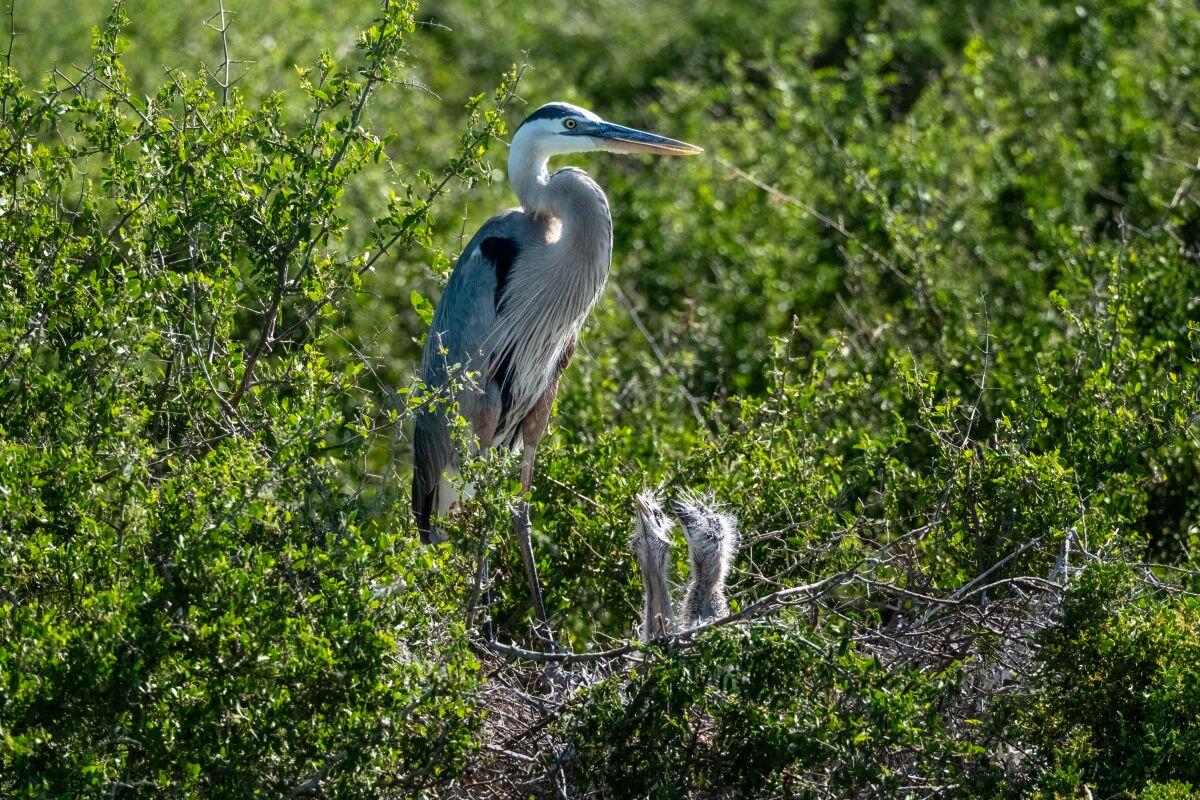
Waterbirds depend on Texas’s coastal islands for nesting. Twenty-six species of colonial waterbirds gather on these islands each year to nest and raise their chicks. With open water separating the mainland from the islands, these sites naturally provide some protection from predators and human disturbance. Many of the islands are man-made, created during the dredging of coastal waterways, and are now severely eroding. Audubon and partners across the coast work to manage these sites to make them as suitable for bird nesting as possible. As erosion continues, we are also working to rebuild and restore these important habitats.
Audubon addresses these pressures through direct habitat protection, restoration, and science-based monitoring. In Matagorda Bay, we expanded ground-nesting habitat on Chester Island using beneficially used dredged material, creating more than eight acres of resilient nesting habitat.
We are also working on beaches, where shorebirds face direct threats from predators and human disturbance. Our Coastal Avian Biologist, Tim Forrester, conducted 78 weekly surveys across six priority sites, directly protecting 11 acres of beach-nesting habitat with symbolic fencing and signage to reduce disturbance. With an award from the Matagorda Bay Mitigation Trust, we will expand our monitoring and stewardship efforts in the Matagorda Bay region this year to benefit Black Skimmers. Skimmer populations have been declining coastwide, and this new project will allow us to work to increase their nesting success.
As we move into March, thousands of waterbirds are returning to Texas’s coastal islands. Shorebirds, such as Wilson’s and Snowy Plovers, are returning to nest on Texas beaches. The Audubon coastal team will be on the water and on the beach, watching for nests and working to protect them. We hope to see even higher numbers of nests and chicks this year. Together with partners and volunteers, Audubon is translating strategy into measurable conservation outcomes for coastal birds.


